
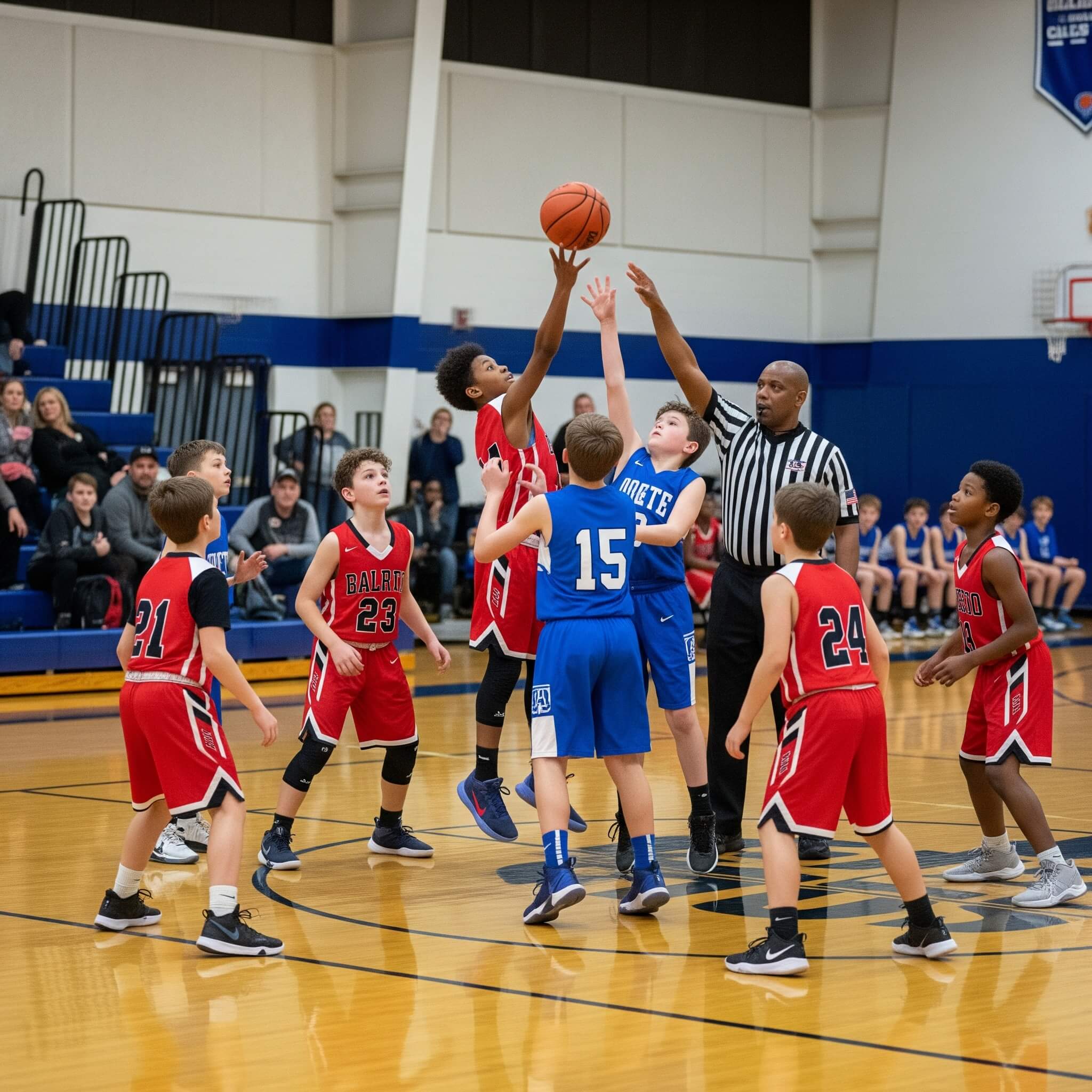
Stop right there. Before you sign that registration form or start dreaming about scholarships, let’s have an honest conversation about whether your child is actually ready for competitive basketball. After four decades of coaching and teaching, I’ve seen too many parents push their kids into situations they’re not prepared for, and I’ve watched the fallout.
Physical Readiness: More Than Just Height
While height and length are physical attributes that coaches swoon over in competitive basketball, during the youth developmental stage there are more important attributes. Here’s what actually matters for a 10-year-old entering competitive basketball:
- Balance and Coordination: Can your child run, stop, and change direction without falling over? Can they catch a ball thrown directly at them? If they’re still tripping over their own feet regularly, they’re not ready for competitive play. Period.
- Basic Movement Patterns: Your child should be able to skip, hop on one foot, and jump with both feet together. These aren’t basketball skills, they’re fundamental movement patterns that every athlete needs. If these aren’t solid, everything else we try to teach will be built on a shaky foundation.
- Attention Span: Can they focus on a task for 15-20 minutes? Competitive basketball requires sustained attention during practices and games. If your child can’t sit through a dinner conversation, they’re not ready for hour-long practices.
Emotional Maturity: The Real Game Changer
Physical skills can be taught, but emotional maturity? That takes time and can’t be rushed.
- Handling Disappointment: Your child will lose games. They’ll make mistakes. They might not get the playing time they want. How do they handle disappointment now? Do they throw tantrums when things don’t go their way, or can they bounce back and try again?
- Following Instructions: In competitive basketball, players must follow complex instructions quickly. If your child can’t follow simple directions at home without arguing or negotiating, they’re not ready for a coach’s expectations.
- Playing with Others: Basketball is a team sport. If your child insists on being the center of attention, won’t share, or gets upset when teammates succeed, then they need more time to develop social skills before joining a competitive team.
Skill Level Reality Check
Forget what you see on your Instagram feed. Here’s what 10-year-olds should actually be able to do:
- Basic Ball Handling: They should be able to dribble with both hands while walking without looking at the ball constantly. That’s it. They don’t need to be doing between-the-legs moves.
- Shooting Form: Proper shooting form matters more than making shots. Can they use both hands to shoot? Do they follow through? Are they using their legs? Range doesn’t matter at this age, only form does.
- Basic Game Understanding: Do they understand the concept of passing to open teammates? Can they tell the difference between offense and defense? These basic concepts are more important than any fancy plays.
Time Commitment: What You’re Really Signing Up For
Competitive club basketball isn’t a casual activity. Here’s what you need to be prepared for as a parent:
- Practice Schedule: Most competitive programs practice 2-3 times per week for 60-90 minutes. Add travel time, and you’re looking at 6-8 hours per week minimum.
- Game Commitments: Weekend tournaments often mean all-day Saturday commitments, sometimes requiring overnight travel. Are you prepared for this level of time and financial investment?
- Year-Round Expectations: Competitive basketball doesn’t end with the season. Off-season training, camps, and skill development continue throughout the year.
Red Flags: When Your Child Isn’t Ready
Each child’s development is different, and should be considered individually. If your child isn’t ready for competitive basketball right now, it doesn’t mean he or she won’t be ready for it in the future. Allow your child the necessary time to develop at their pace. Here are some warning signs you don’t want to miss:
- Needs constant encouragement to participate in current activities
- Shows no interest in watching or talking about basketball
- Becomes upset when they don’t win at everything
- Can’t handle basic criticism or correction
- Refuses to practice skills outside of organized activities
- Shows signs of being overwhelmed by current commitments
How The Kane Academy Evaluates Young Players
We don’t just look at basketball skills. Our assessment includes:
- Character Observation: How does your child interact with peers? Do they encourage teammates or tear them down? Character can’t be taught in a few weeks, it’s developed over years.
- Coachability: Can they accept feedback without arguing? Do they try to implement corrections? A coachable attitude matters more than natural talent.
- Work Ethic: Are they willing to practice skills that aren’t fun? Can they push through challenges without giving up immediately?
- Family Support: Is the family committed to the process, or are they looking for quick results? We need parents who understand that development takes time.
Making the Right Decision
If your child checks most of these boxes, they might be ready for competitive basketball. But remember:
- It’s not now or never: Waiting another year for your child to mature isn’t giving up on their dreams, it’s setting them up for success.
- Development isn’t linear: Some kids are ready at 9, others at 12. Stop comparing your child to their peers.
- The goal is long-term development: Rushing into competitive play often backfires, creating burnout and negative associations with the sport.
Is your child ready for competitive basketball?
Your 10-year-old doesn’t need to be the next LeBron James to play competitive basketball. But they do need to be physically, emotionally, and socially ready for the demands of the sport.
At The Kane Academy, we believe in developing the whole child, not just their basketball skills. If your child is ready for that journey, truly ready, we’ll help them reach their potential. But if they’re not ready yet, that’s okay too. The game will still be there when they are.
The question isn’t whether your child has potential. The question is whether they’re ready to do the work to develop that potential. Answer that honestly, and you’ll make the right decision for your young athlete.
Remember: Champions aren’t made in a season. They’re developed over years through consistent effort, proper support, and age-appropriate challenges. Make sure your child is ready for that journey before you both commit to it.